Website design · Development · Landing pages

Make the nextclick count.

Give people a clear reason to stay. And an easy way to enquire. We design and build websites and campaign landing pages around what your customers need to do next.

New website or a rethink? Start with what isn't working.

Clear to use.
Built with purpose.
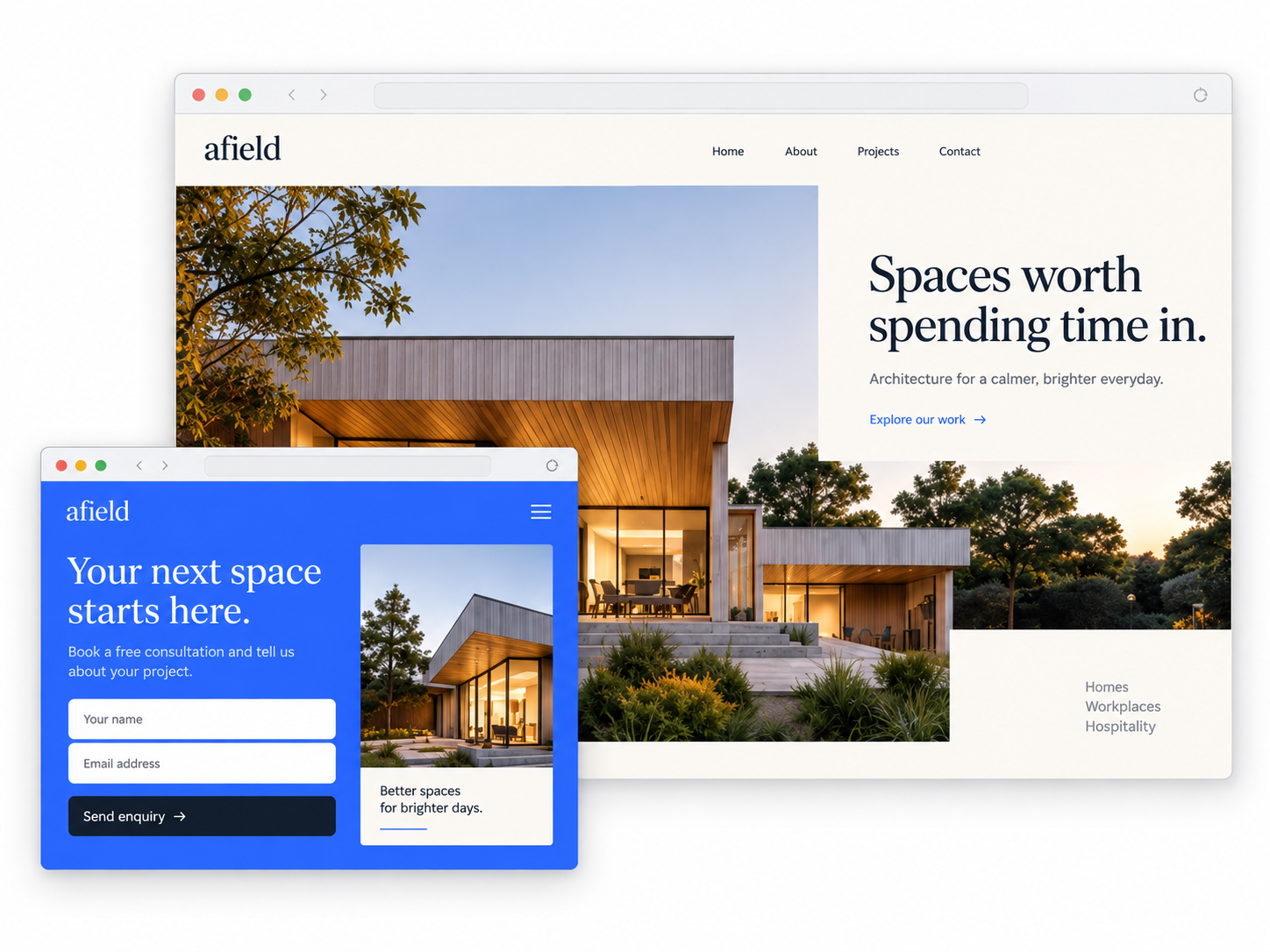
Concept designs showing an architecture business website alongside a blue campaign landing page with an enquiry form.
  1. Find it.

    A clear structure for people and search.

  2. Understand it.

    The right message, without the guesswork.

  3. Take the next step.

    An easy way to enquire, book or buy.
Where websites lose people

They clicked.
What happens next?

A visit is only the beginning. Your website needs to help people understand, trust and choose your business.

  1. Your offer takes work to understand.

    People see what you do, but can't tell why it matters to them.

  2. Mobile feels like an afterthought.

    Small text, awkward menus and long forms get between interest and action.

  3. The next step isn't obvious.

    Visitors are ready to ask, book or buy. The page leaves them guessing how.

What we can build

Give your website
a clear job.

Introduce the business. Support a campaign. Sell a product. We shape the build around what it needs to do.

Not sure whether to improve or rebuild? Tell us what isn't working.

Talk through your website
Business websitesMake your business easier to understand and choose.

A good fit for: businesses that need to explain their offer, show their work and turn questions into enquiries.

We plan the page structure, shape the content and build a website your customers can navigate and your team can manage.

  • Page planning
  • Responsive design
  • CMS setup
  • Enquiry forms
Campaign landing pagesOne audience. One offer. A clear next step.

A good fit for: ads, launches, events and specific offers that need a focused destination.

We connect the campaign message to the page, answer the questions that matter and make the enquiry or sign-up process clear.

  • Offer messaging
  • Page design
  • Form integration
  • Conversion tracking
E-commerce websitesHelp people find the right product and buy it.

A good fit for: brands launching an online shop or improving an existing buying experience.

We organise your catalogue, design useful product pages and configure the agreed checkout, payment and shipping options.

  • Product pages
  • Catalogue navigation
  • Checkout setup
  • Payment integration
Website improvementsKeep what works. Fix what gets in the way.

A good fit for: websites with a useful foundation but unclear content, mobile issues or a difficult enquiry journey.

We review the current site, identify the priorities and agree on focused changes. If a rebuild is the better option, we'll explain why.

  • Website review
  • Content refinement
  • Mobile fixes
  • Performance improvements

These are possible inclusions. Your proposal confirms the deliverables, integrations, timeline and any ongoing costs.

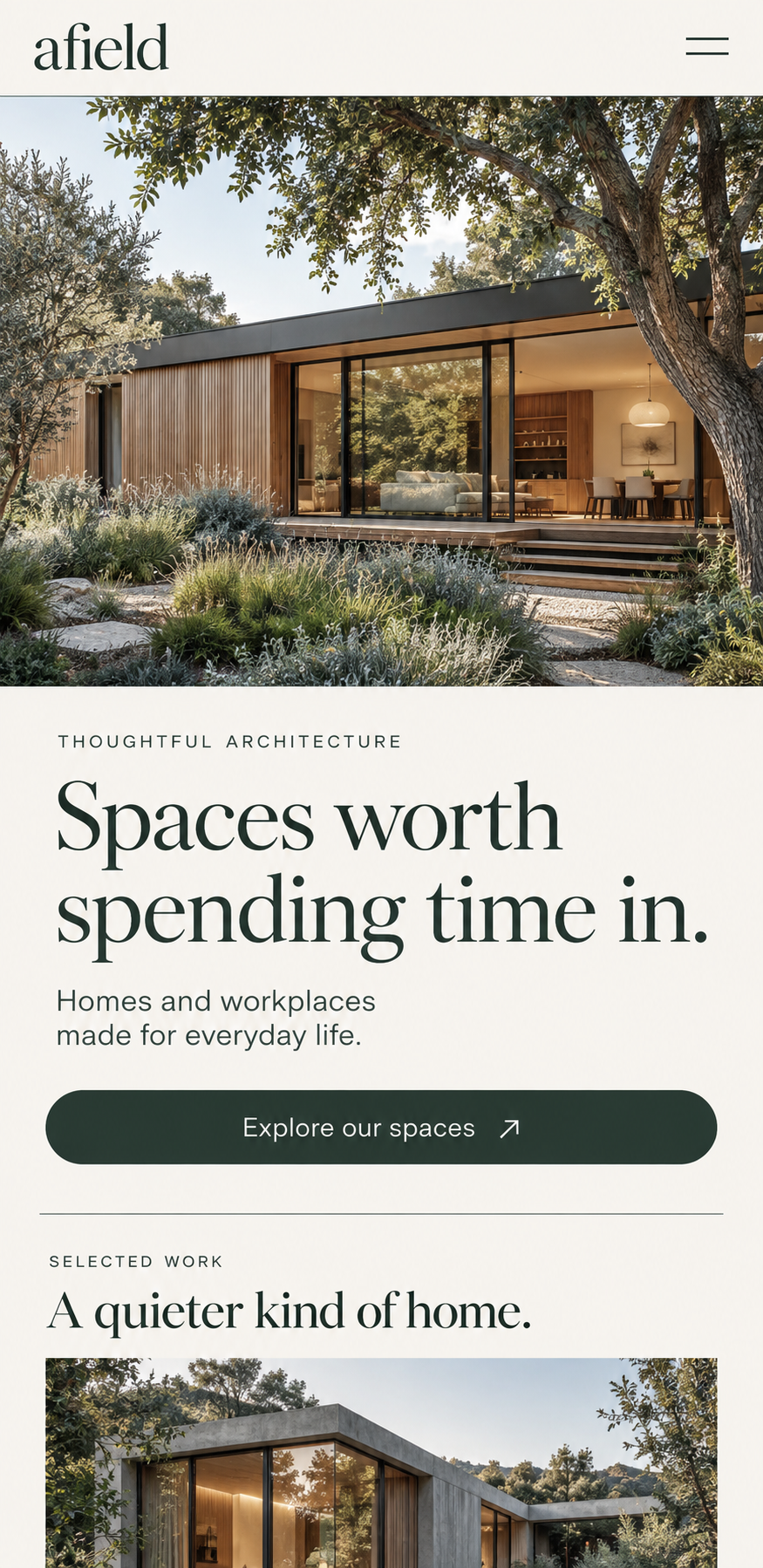
Illustrative mobile website layout showing readable content and a clear page structure.

The details that make it work

Built to look good.Designed to be useful.

Every page should help someone do something. Understand your offer. Find an answer. Take the next step. We design around those moments.

  • Make the message clear.

    Useful headings, focused copy and a logical page structure help visitors understand what you offer and why it matters.

  • Make mobile feel natural.

    Readable text, comfortable tap targets and simpler forms. We check how the experience holds together on smaller screens.

  • Build search into the structure.

    Clear page titles, internal links and indexable content give your website a sound starting point for organic search.

  • Measure meaningful actions.

    Track the agreed actions, such as enquiries, bookings or purchases, so improvements start with evidence.

Thought through from the first page to the final tap.

Talk through your website

How your website takes shape

A clear plan. A considered build.

You should know what we're making, why it matters and what happens next. Here's how we move from the first conversation to a website ready to use.

Before work begins, we agree on scope, responsibilities, review rounds and the launch plan.

Talk through your project

From brief to browser 04 stages

  1. Get the right brief.

    We explore your business, audience and goals, then review what you already have. Together, we define what the website needs to help people do.

    Outcome A shared brief and agreed priorities.

  2. Give every page a purpose.

    We map the pages, plan the content and work through the key visitor journeys. You review the structure before we develop the visual design.

    Outcome An agreed sitemap and key page layouts.

  3. Design it. Build it. Refine it.

    We turn the agreed direction into responsive designs, then build the pages and integrations. Review points keep your feedback part of the work.

    Outcome A working website on a private preview.

  4. Check the details. Go live.

    We check the agreed devices and browsers, forms, links, search settings and tracking. After your approval, we launch and walk your team through the handover.

    Outcome A live website with access and guidance.

After launch, maintenance and further improvements can be scoped separately around what your team needs.

01—05 Finding the right starting point

Can you improve our existing website?

Yes. We start by reviewing the content, structure, mobile experience and current platform. Sometimes a few focused improvements are enough. If the foundations are limiting what you need, we’ll explain where a rebuild makes more sense before agreeing on the scope.

Do we need a full website or a landing page?

A website gives people room to explore your business, services and work. A landing page focuses on one offer and one next step, such as an enquiry from an advertising campaign. We’ll help you choose based on your audience, traffic sources and what you want visitors to do.

What does a website project cost?

The scope sets the price: page types, content, functionality and integrations all affect the work involved. After understanding your needs, we propose a scope and investment. Hosting, paid tools and ongoing support should be identified separately, so you can see the full commitment before deciding.

How long will the project take?

A focused landing page and a larger business website need different schedules. Timing also depends on content readiness, integrations and feedback. We agree on milestones before work begins. If you have a launch date in mind, share it early so we can assess what’s realistic.

What do you need from us to get started?

Start with your business goals, audience, current website and the main thing you want to improve. Existing brand files, content and examples you like are useful too. You don’t need everything ready for the first conversation; we’ll identify what’s available, what’s missing and who will provide it.

06—10 Building it. Making it yours.

Can you help with the words and images?

Yes. Copywriting, content structure and image direction can be included in the project. We agree on who supplies each asset and whether photography or licensed images are needed. Your team reviews business details so the finished website sounds like you and represents your offer accurately.

Will it work well on mobile and support SEO?

We plan layouts, navigation and forms for smaller screens as well as desktop. Search foundations can include page titles, headings, internal links and indexability checks. Your proposal defines the checks included. Search rankings aren’t guaranteed; ongoing SEO and content work are separate from building the site.

Will our team be able to update the website?

Where regular editing is needed, we plan the website around a suitable content management system and agree on what your team should be able to change. Handover covers the agreed editing tasks and access. More complex layout changes or new features may need additional development.

Can it connect to our forms, CRM or booking tools?

We assess the tools you use and the information that needs to move between them. Forms, booking systems, payments and CRM connections can be scoped where the platforms support them. Access requirements, subscription costs and technical limits are checked before an integration is confirmed.

What happens after the website goes live?

Handover should leave you clear on access, editing and who looks after the site. We agree on any launch support in the proposal. Maintenance, backups, software updates and future improvements can be scoped separately, with responsibility for each part made clear.

Every website has a different job. Your proposal confirms the deliverables, timeline and support for yours.

Scroll to Top